The Nonfunctional Turf Ban's First Deadline Is January 1. What Orange County Properties Should Document Now
On January 1, 2027, California's ban on watering nonfunctional turf with drinking water reaches its first properties: those owned by cities, counties, other public agencies, and water systems outside disadvantaged communities. Businesses follow a year later and HOA common areas a year after that, and the first deadline is now only weeks away.
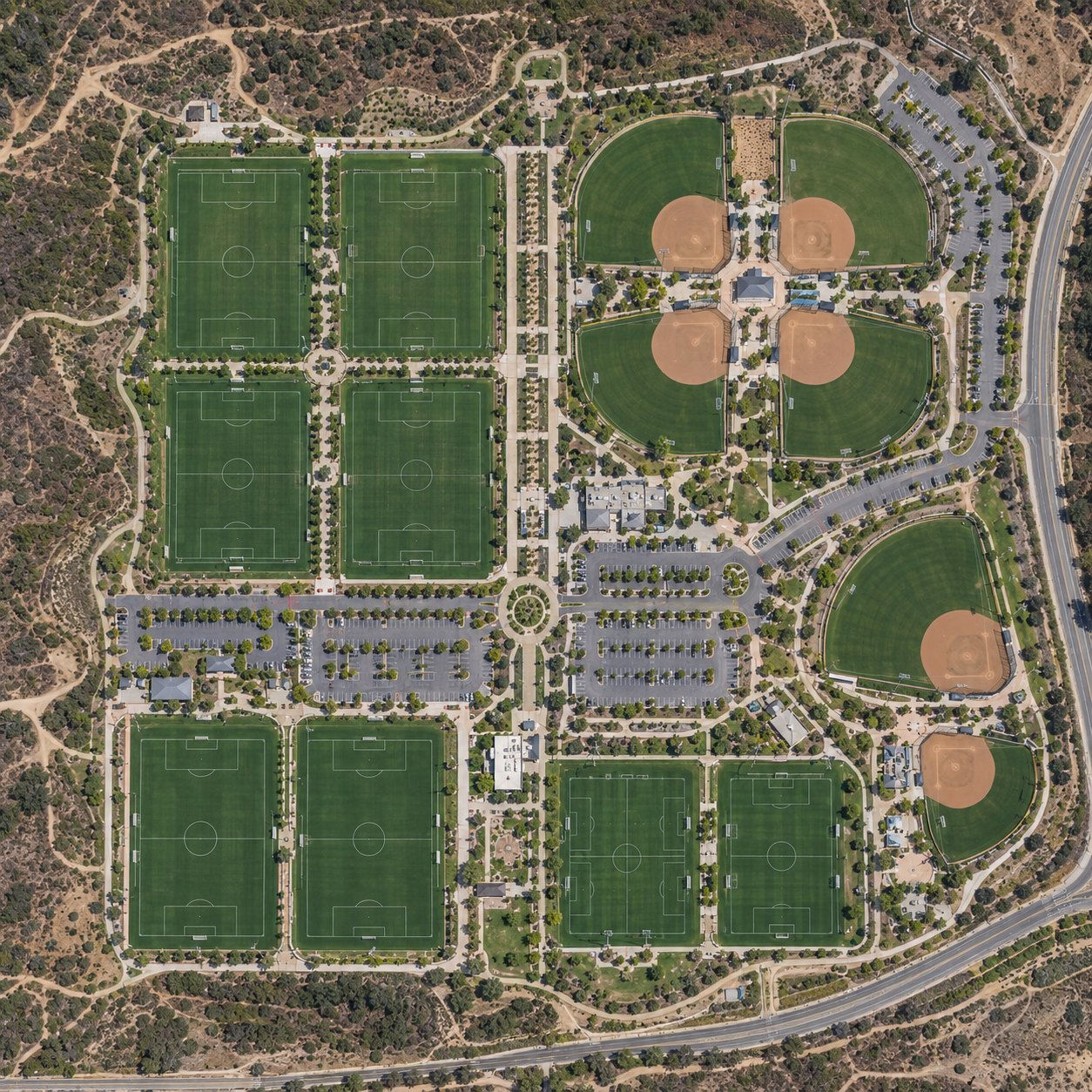
The nonfunctional turf ban comes from Assembly Bill 1572, signed in October 2023. If you manage parks and medians for a city or public agency, run a business park or retail center as a commercial property manager, or serve on the board of an HOA or master planned community, the law reaches you on a fixed date. It does not require anyone to remove grass. It limits which water can be used on certain grass, and the first questions it raises are practical: which turf on your property counts, how much of it there is, and what it looked like before anything changed.
The same January 1 date also applies to water providers, which must have their own rules updated and communicated to customers by then. Across Orange County, that means notices from your local water provider are likely to arrive over the coming months.
What the nonfunctional turf ban says
The law added section 10608.14 to the California Water Code. It prohibits using potable water, meaning treated drinking water, to irrigate nonfunctional turf on covered properties, according to the State Water Resources Control Board.
Everything turns on the definitions, as the State Water Board and the Municipal Water District of Orange County (MWDOC) describe them:
- Turf is mowed grass.
- Functional turf is grass used for recreation or community activities, such as sports fields, school fields, picnic areas, and informal play in a park or green space.
- Nonfunctional turf is everything else. Examples include grass in street medians, parkways, and parking lots, grass along signs, buildings, and sidewalks, and lawns at business parks kept for appearance.
Grass that a fence or barrier permanently keeps people out of is treated as nonfunctional, and MWDOC notes that turf can be nonfunctional whether or not it is fenced. The law also does not order turf removal. Converting to a water-wise landscape is one way to comply, MWDOC explains, but the rule itself is about the water.
The deadlines, by property type
The ban phases in by who owns the property. MWDOC and a Best Best & Krieger legal alert lay out the schedule, and the State Water Board confirms the 2027 date:
- January 1, 2027: properties of local governments, local and regional public agencies, and public water systems, outside disadvantaged communities. State properties managed by the Department of General Services are on the same date, according to the State Water Board, and water providers must have updated their rules by then.
- January 1, 2028: commercial, industrial, and institutional properties.
- January 1, 2029: HOA common areas, common interest developments, and certain community service organizations.
- January 1, 2031, or when state funding for conversion is available, whichever is later: public properties in disadvantaged communities.
There is also a paperwork step. According to MWDOC, public and commercial properties with more than 5,000 square feet of irrigated area must self-certify compliance to the State Water Board every three years starting June 30, 2030, and HOA-type properties above the same size start June 30, 2031. The State Water Board lists its certification form as coming soon.
What stays exempt
- Residential lawns. Homeowners may keep watering their own turf with potable water.
- Turf irrigated with recycled or other non-potable water.
- Cemeteries, which are carved out of the commercial category.
- Trees and other perennial plantings that are not turf, which may still receive potable water where needed to keep them alive.
- Watering to address an immediate health and safety need.
The tree provision matters on older sites. Many Orange County parks, campuses, and HOA greenbelts have mature trees growing inside lawn areas, and those trees often depend on the same irrigation that waters the grass around them.
What happens in Orange County this fall
MWDOC directs questions about the law to each property's local retail water provider. Those providers are adopting or revising ordinances and policies to match the law before January 1, and urban retail suppliers submit those rules to the State Water Board as part of their conservation reporting, according to Best Best & Krieger. Water systems, cities, and counties can all enforce the restrictions, and a city or county must notify the water system before acting against one of its customers.
MWDOC also points property owners to its Turf Replacement Program and a Spray-to-Drip rebate that can be combined with it. Program terms change, so check current details with MWDOC and your water provider before planning around them.
What this means for you
Whether a given patch of grass is functional is a question for your water provider and your landscape professionals. What you can control now is the record they will work from. The organizations that move smoothly through a rule like this one usually start with a clear picture of what they have.
Records to have ready
- A current map of every irrigated area, with turf, planting beds, trees, and hardscape shown separately.
- For each turf area, a note on how it is actually used: sports, events, play, or none.
- The water source for each area, potable or recycled, tied to its meter.
- The trees growing in or beside turf that you intend to keep, so irrigation plans can protect them.
- A dated baseline of how each area looks before any conversion, followed by records during and after the work.
- Approximate irrigated area by site, so you know early whether the 5,000 square foot certification threshold is likely to apply.
By audience
Cities and public agencies face the nearest date and the most scattered turf: medians, parkways, civic center lawns, and facility frontages. Commercial owners and property managers have until 2028, which is roughly one budget cycle and one planting season away once design and approvals are counted. HOA boards have until 2029, but common area changes run through reserve planning and member communication, so decisions made in 2027 shape what is in place on time. Landscape contractors carrying out conversions benefit from dated before and after records that show the scope of work on each site.
How FlyCRE fits
From our base in Orange County, FlyCRE captures orthomosaic, thermal, asset visibility, and multispectral data on every scheduled flight, processes it, and keeps a permanent, timestamped record for comparison. For turf, the orthomosaic gives a dated, map-accurate view of where grass, planting beds, trees, and hardscape sit, with approximate areas for reference that are not survey-grade. The multispectral layer records vegetation across turf and planted areas, and the thermal layer records surface temperatures across the site. Flown on a schedule, those layers show each area before, during, and after a change.
All pilots are FAA Part 107 certified, every operation is insured, and we do not capture data of private residences or property we are not hired to document. We document. Your water provider, landscape architect, and counsel interpret, and decisions about what counts as functional turf belong with them.
Sources
- Nonfunctional Turf, State Water Resources Control Board
- Nonfunctional Turf: What to Know (Assembly Bill 1572), Municipal Water District of Orange County
- AB 1572, Potable water: nonfunctional turf (2023), California Legislative Information
- Non-Functional Turf Ban: Compliance Deadlines and Action Steps for Public Water Systems, Best Best & Krieger LLP
This article summarizes public regulatory documents and reporting as of October 15, 2026. It is general information, not legal, insurance, or compliance advice. Regulations change; confirm current requirements with your counsel, fire authority, carrier, or a qualified professional. FlyCRE documents conditions and does not make compliance or insurance determinations.